 Jan 1, 2022
Cool in 2010’s: I’m immortalized in the bitcoin blockchain.
Cool in 2020’s: I’m immortalized in the weights of GPT-3.
Note from fast.ai book: “The dataset you get given is not necessarily the dataset you want. It’s particularly unlikely to be the dataset that you want to do your development and prototyping in. You should aim to have an iteration speed of no more than a couple of minutes—that is, when you come up with a new idea you want to try out, you should be able to train a model and see how it goes within a couple of minutes”
“It’s interesting that the learning rate finder was only discovered in 2015, while neural networks have been under development since the 1950s. Throughout that time finding a good learning rate has been, perhaps, the most important and challenging issue for practitioners. The solution does not require any advanced maths, giant computing resources, huge datasets, or anything else that would make it inaccessible to any curious researcher. Furthermore, Leslie Smith, was not part of some exclusive Silicon Valley lab, but was working as a naval researcher. All of this is to say: breakthrough work in deep learning absolutely does not require access to vast resources, elite teams, or advanced mathematical ideas. There is lots of work still to be done that requires just a bit of common sense, creativity, and tenacity.” fast.ai book.
The fact that everyone is obsessed about how a centralized exchange (mis)managed user funds means there’s still a loooong way to go for crypto. The whole fucking point was reducing third party risk.
“Deep learning folks really do like to add jargon everywhere they can!” .- Jeremy Howard.
I like this guy better every day :)
“The reason why this works is not entirely obvious” .- an honest machine learning teacher
𒂗𒃶𒌌𒀭𒈾, sumerian name of Enheduanna: a woman and the first known named poet. How cool is that?
“The mark of a good programmer: given any tools you will figure out a way to get it done” - John Carmack
If we ever build true AGI, will they want to do the dishes for us? Is it even OK of us to ask?
“Ironically, Stable Diffusion’s manner of release moves us closer to “open AI” than the way DALL·E was released by the company called OpenAI.”, Andrew Ng.
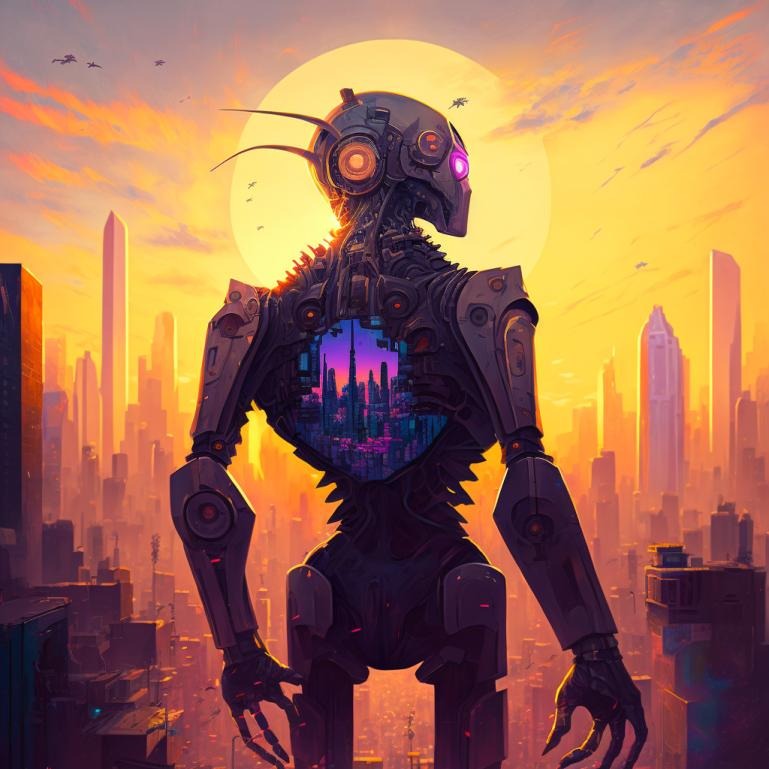
Image made with MidJourney.

I recently noticed that people who don’t read science fiction have a harder time telling apart science from fiction.
Heard at Burning Man: “Affluence is the ability to invest in the generations that follow.”
I finished Naval Ravikant’s book. What resonated most today for me is: “I think being successful is just about not making mistakes.”